vultures

  • HOME
  • ABOUT
  • GALLERY
  • YOU CAN
    HELP!
  • EDUCATION
  • SPONSORS
  • CONSERVATION
    PROJECTS
  • REHABILLITATION
    CENTER
  • MEDIA &
    PUBLICATIONS
  • STAFF
  • ARCHIVE


NEWS FEED

21 September 2011
Cape Vulture Breeding and Reintroduction

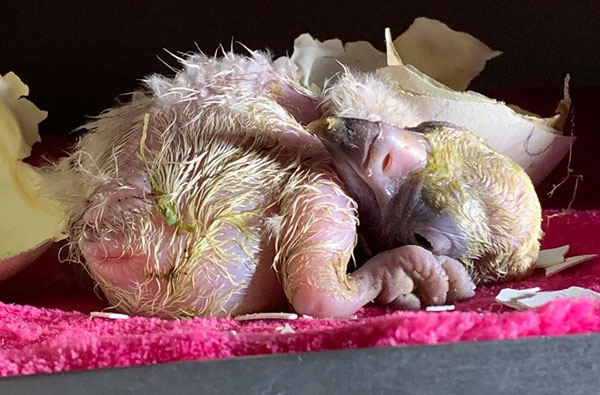
The Vulture Programme in collaboration with the Johannesburg Zoo is proud to announce the hatching of their first captive bred Cape Vulture chick which hatched on 1 September 2011, this chick is unique in that the method used to successfully breed this chick is the first for the species in South Africa, as well as the first chick destined for Namibia as part of our Namibian Cape Vulture Recovery Plan.

The egg was laid on 11 July 2011 on an artificial breeding cliff inside an enclosure at the Vulture Programme's Vulture Centre near Hartbeespoort Dam. The egg was then transferred to an incubator where it was artificially incubated for 54 days. During this time, the parents were given a dummy egg to continue incubating. On 30 August the chick was heard inside the egg's air-space and the next day the chick was assisted throughout its hatching process in order to safe guard and guarantee its survival during this stressful period.

At 15:00 on 1 September, the chick was taken to its natural parents and swapped with the dummy egg using a specially made plastic egg shell from which the parents could easily 'hatch' the chick. The parents immediately heard the chick inside the artificial egg shell and assisted it to hatch again after which they carefully and proudly inspected their offspring and started brooding. Our breeding and swapping attempt proved to be successful and fourteen days later, the chick has doubled in size and the parents are quite comfortable allowing us to watch their feeding regime.

This technique allows us to produce parent reared 'wild' chicks that are suitable for release into their natural environment, as opposed to hand raised chicks which can be human imprinted, while eliminating many of the dangers of natural incubation and hatching. Cape Vultures are colonial birds, but will mate for life, carefully choosing their 'soul-mate' from a large group. In captivity, they may not meet a suitable mate, thus for successful breeding, several birds need to be housed together to allow them to make their own partner selection.

The Namibian Recovery Plan is focused on preventing the extinction of the species in Namibia where they are now extinct as a breeding species. The intention of the plan is to undertake ex-situ breeding of Cape Vultures with the goal to reintroduce these vultures back into existing home ranges in Namibia with the purpose of stabilising the remaining wild population. The ultimate goal being to increase the individual number of Cape Vultures to the point of natural breeding once again on Namibia's Waterberg Plateau.

Background:

The Cape Vulture is southern Africa's only endemic vulture species and is listed as critically endangered in Namibia with approximately 12 wild Cape Vultures left in the country.

South Africa has the largest population of breeding Cape Vultures, however still listed as vulnerable by the IUCN (2000) with an estimated 2400 breeding pairs in the wild (Vulture Programme unpublished data 2011). In view of the few remaining Cape Vultures left in Namibia, unless the mitigation of identified threats is undertaken, in addition to a captive breeding and reintroduction programme, the species will be lost to Namibia and only a few vagrant Cape Vultures from South Africa will be seen visiting some of the natural and historical foraging sites. Vulture species across the globe are facing similar threats with the Cape Vulture being no exception, resulting in a continuous downward spiral throughout much of their range. Human activities have had the largest impact on vultures throughout the world.

Power line electrocutions and collisions together with inadvertent poisoning remain two of the greatest threats that vultures as well as other birds of prey are facing in southern Africa. Disturbance at nesting and roosting sites contributes to a loss of suitable nesting/roosting habitat for vultures. Human population expansion continues to claim large areas of wilderness, which will eventually be lost to vulture populations. Development in wilderness areas for eco-resorts is a cause of great concern as these areas are often branded as 'eco-friendly' however, impacts are often as serious as many agricultural developments. Climate change could possibly have an impact on the birds breeding behaviour, a threat that requires further focused research to understand its potential impact on the species. In Namibia, mismanagement of some farmlands has led to severe bush encroachment over large areas, and recent research has indicated that this also has an adverse effect on the vulture's ability to find food.

21 September 2011
CV Chick Progress on the nest @ 17 Days
11 September 2011
Cape Vulture Breeding at VulPro
Artificially incubated, parent reared in captivity by non releasable adults in our breeding enclosure, destined for release into Namibia, this chick is now ten days old, only seven years to go till its old enough to start making its own contribution to this species survival. This chick is looking for a sponsor to finance the Tracking Device that will help to keep it safe after its release, and for transport, pre-release housing in the form a hacking enclosure that needs to be built in Namibia and more. Cape Vultures are extinct as a breeding species in Namibia.

Please contact us if you want to get involved. Full Sponsorship would give the right to place tracking data on company website, name the chick etc.
10 August 2011
Wild Art Africa
From Daniel Taylor (Internationally acclaimed artist) – a Tribute to VulPro in the Words of Daniel: "It is to YOU and to your tremendous workmanship and devotion that this painting is dedicated too and can only hope that this painting (prints) will be able to help raise those ever so needed funds toward your programs."

For more information, or if you are interested to buy a print, please visit: Wild Art Africa
26 June 2011
Vultures Chose Me
A Film Produced for the Mazda Wildlife Fund, by Micheal Raimondo of Green Renaisance.
This film is about Vultures, their Plight, and Kerri, who has made it her mission to save them.
14 June 2011
VulPro Gala Fundraiser Dinner
20 December 2010
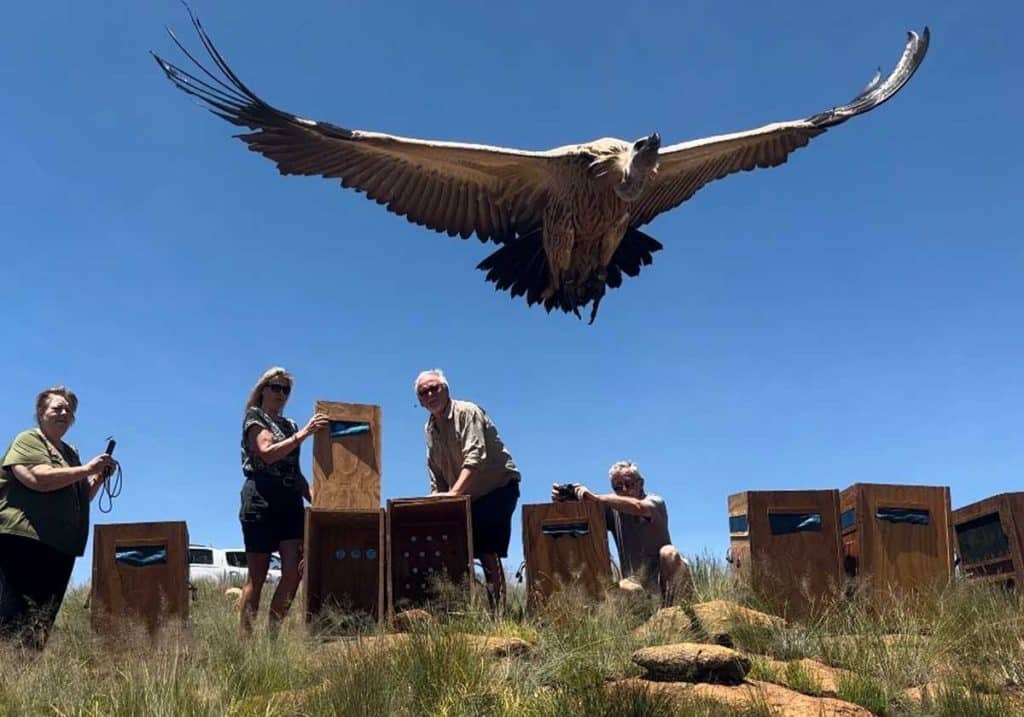
VulPro Cape Vulture release on 19 Dec 2010
Four birds go back where they belong! Dorianne and Francois worked for many hours to save two of these birds, one from a Puff Adder bite, and the other from burns in the trachea from a, electric fence collision. Extremely satisfying to see them go!

30 November 2010
Cape Vulture organophosphate poisoning
The bird suffered from seisures for 2 days starting every 2 hours and increasing to every few minutes. These seisures then progressed to every few seconds and continuously until the bird was euthanaised. During the 2 day process, the bird was being treated for organophosphate poisoning with no success and no signs of improvement.

17 September 2010
I Believe I can Fly
MAZDA Wildlife Fund advertisment 2010


Your donations to help the plight of Vultures will be hugely appreciated and will go a long way to ensuring the continued survival of these wonderful birds.

More Info


Contact us to see how you can play an important role in vulture conservation and other projects in South Africa.


More Information


Kerri Wolter
Mobile: +27 82 808 5113
Fax: +27 86 505 6470


Walter Neser
Mobile: +27 76 593 9849


Lapped Faced VultureExecutive Summary

Vultures form an important ecological component of our natural environment, cleaning up dead carcasses and decreasing the spread of some diseases. The relationship between vultures and people is also a venerable one – vultures played roles in some early societies, including the Egyptian and the Hindu societies; vultures continue to be used as symbols or metaphors in modern societies; and vulture body parts are used in muthi.

Today, vultures face an unprecedented onslaught from human activities. They have to cope with electrocutions and collisions with electrical structures, poisonings, land-use changes, a decrease in food availability and exposure to toxicity through veterinary drugs, to list just a few of some of the challenges facing vultures today.

Vultures, positioned at the top of the food chain, are an indicator of the health of the environment below them – and dependent for their survival on a healthy environment. As such the work of the Vulture Conservation Programme ("VulPro") work is intended and expected to impact on many other aspects of the environment – beyond vultures.

VulPro approaches vulture conservation in an integrated, multidisciplinary fashion, with the benefits from the programme accruing to both vultures and society at large. VulPro combines education and good science, with networking, capacity building and knowledge generation. The veterinary disciplines of toxicology, pharmacology, clinical pathology and medicine are combined with the science of cell-phone telemetry and the banking of genetic resources, with the goal being to positively influence the well-being of our natural resources to the ultimate benefit of society. In this regard, VulPro engages in a number of interrelated activities, and uses a variety of resources, in endeavouring to meet its objectives.

GPS tracking devises are used to determine foraging and home ranges of a large number of vultures in Southern Africa. The output from this research allows for the monitoring of capture-release free-ranging vultures and for the mapping of areas for further actions (such as community education and the safeguarding of vulture food through the monitoring of vulture restaurants).

VulPro conducts and facilitates educational talks and interaction with both tame and wild vultures at the rehabilitation and educational centre in Hartbeespoort, and regionally, through the follow-up of vulture home range and feeding studies.

Undertaking and publishing studies determining drug residues in carcasses, and lobbying communities and society for appropriate actions to be taken to benefit our natural environment and to ameliorate the effects of drugs on vultures are part of VulPro's work. This work includes proactive efforts to determine, evaluate and monitor veterinary drugs or chemical residues in carcasses that are made available to vultures; building dedicated laboratory models for predicting avian toxicity; using mass awareness campaigns to involve and get feed-back from the public; determining the home ranges of vultures, so as to better understand their foraging habits; and collecting appropriate biological samples for current and future project use.

Through partners, such as the Faculty of Veterinary Science at the University of Pretoria, potentially harmful veterinary substances similar to diclofenac, can be identified and monitored. Where necessary, VulPro can engage in or support lobbying for the removal or responsible use of these substances.

With the many threats vultures are facing throughout Southern Africa, vulture rehabilitation has become an essential part of the work of VulPro. Collecting grounded, injured, poisoned and disabled vultures around South Africa, special emphasis within the Gauteng, North West and Limpopo Provinces, VulPro is able to save many vultures that would otherwise have met untimely deaths. By doing this, VulPro is in a position to release those vultures that are fit and healthy and to keep in captivity those that cannot be released, for breeding, research and educational purposes. Vulture populations are in many instances so depleted that the rehabilitation and release of individual birds can be ecologically and genetically significant. At present, VulPro operates the only facility approved by Gauteng Nature Conservation and recognised by North West Nature Conservation for vulture rehabilitation.

This multidisciplinary and networking programme looks at conservation holistically, by focusing on the vulture at the top of the food chain and gaining new knowledge on the environment below and so also impacting on society's well-being.

Objectives:

  • Vulture rehabilitation
  • Collect injured, grounded and disabled vultures
    On-going monitoring of released vultures using patagial tags and GSM/GPS devices
  • Distribution, dispersal and foraging ranges of vultures
  • Tracking of the Magaliesberg Cape Vultures using patagial tags and GSM/GPS devices
    Monitoring of vulture restaurants and recording vulture re-sightings i.e. patagial tags and photographs
    Tracking African White-backed and Cape Vultures which frequently visit Mankwe Nature Reserve, adjacent to Pilansberg
    Monitoring and tracking Cape Vultures from the Manoutse breeding colony near Kruger National Park
    Recording and keeping a database of all vulture re-sightings related to the B-series of patagial/wing tags
  • Cape Vulture breeding monitoring (four largest colonies globally):
  • Magaliesberg
    Kransberg
    Blouberg
    Manoutsa
  • Veterinary and ecological research related to vultures:
  • Researching the effects of lead and NSAID's on vultures
    Surveying and studying vulture restaurants
    Researching the role vultures play in the spread of diseases
    Ongoing research related to providing veterinary treatment for vultures (i.e. for snake bites, poisonings etc.)
  • Cape Vulture breeding and reintroduction programme (Namibia)
  • Creating a safer environment for vultures in Namibia.
    Rebuilding the Cape Vulture population in Namibia.
    Monitoring the Cape Vulture population in Namibia as part of a national avian scavenger population monitoring programme.
    Providing an effective information, outreach, education and information sharing platform for vulture conservation as well as facilitating collaborative conservation support in Namibia and the region.
  • Vulture educational and awareness programmes
  • Holding talks and public displays
    Conducting workshops and training
    Assisting with farmer/vulture conflicts

TERMS OF REFERENCE


Your donations to help the plight of Vultures will be hugely appreciated and will go a long way to ensuring the continued survival of these wonderful birds.

More Info


Contact us to see how you can play an important role in vulture conservation and other projects in South Africa.


More Information


Kerri Wolter
Mobile: +27 82 808 5113
Fax: +27 86 505 6470


Walter Neser
Mobile: +27 76 593 9849


You can help!


Perhaps you are not able to assist financially but have some of these items at home or know of friends, family members etc who have and who are willing to donate them to this worthy cause…

Additional items needed:

• Chest freezer (300-400 litre)

• Gum boots (size 6 and size 9)

• Work overalls

• Rain coats

• Industrial hose pipe – 30m long or more

• Welding gloves

• Centrifuge (http://store.clarksonlab.com/C884E.aspx)

• Heating pads

• Infrared light or ceramic heating bulbs x 2

• Building supplies for office construction (30 square metres)

• Cork tiles (8 square metres)

• Scrubbing brushes

• Steel brushes

• Butchers knives

• Outside hard brooms

• 90% shade netting

• Owl nesting boxes

• Data projector

• Winch

• Block & tackle – carcass hoist

• High pressure cleaner

• Mist sprays for each enclosure with water piping for connection

• A4 laminator

• A4 document binder


Your donations to help the plight of Vultures will be hugely appreciated and will go a long way to ensuring the continued survival of these wonderful birds.

More Info


Contact us to see how you can play an important role in vulture conservation and other projects in South Africa.


More Information


Kerri Wolter
Mobile: +27 82 808 5113
Fax: +27 86 505 6470


Walter Neser
Mobile: +27 76 593 9849


VulPro engages in public awereness programmes and education campaigns in South Africa and further afield. The largest event annually is International Vulture awareness Day, which draws in excess of 500 visitors to the center on the first Saturday of September.

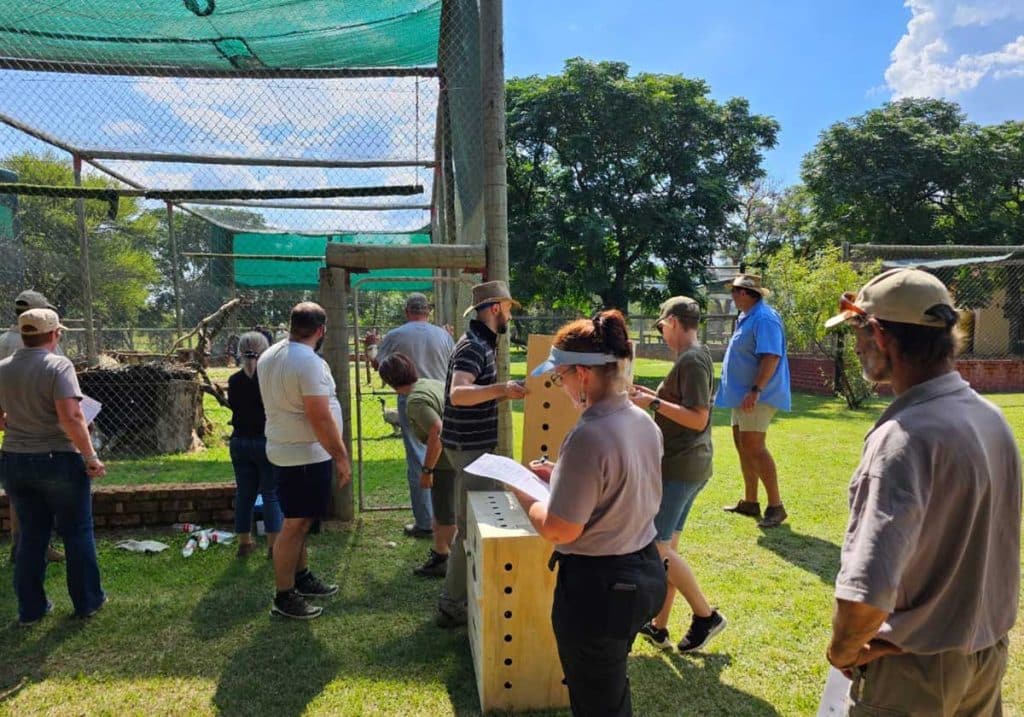
School groups visit the center and are given a 30 minute formal power point presentation in our educational facilities followed by close-up encounters with 5 vulture species as well as other large birds of prey and owls. Each child is given a vulture booklet and interactive sheet to take home and/or complete in their classrooms.

We also offer unique school experiences to schools whereby we take a live vulture into the classroom and offer the school, its pupils and staff a close-up educational experience. We also provide educational material during these visits together with a formal power point presentation, structured to meet the pupils age groups. For further information please contact us.

Vulpro act as host and supervisor to students for their practical year, supplying accomodation, stypend and hand on conservation and rehabilitation experiance, as well as research projects.

VulPro Species Poster VulPro Threats Poster

THE VULTURE
Cape VultureA vulture is an easily recognizable bird with its large size, bald-head, hooked bill which feeds on carcasses and majestically soars through the skies.

A particular characteristic of many vultures is the bald head, devoid of feathers. This is because a feathered head would become spattered with blood and other fluids, and thus be difficult to keep clean.

Vultures are found on all continents except Australia and Antarctica.

Vultures have always evoked strong emotions from people; from being seen as symbols of divine qualities, clairvoyant whereby they are able to 'see' into the future to being misunderstood and called 'ugly, disease riddled' birds. Vultures have for years been persecuted and misunderstood by many, it is for this reason that they are continuously declining at a rapid rate. Their habitat and unique behaviour is unknown, or misunderstood and so is their reason for existence.

Old World vulture
(Source: www.wikipedia.com)

Old World vultures belong to the family Accipitridae, which also includes eagles, kites, buzzards and hawks. They are not at all closely related to the superficially similar New World vultures and condors, and do not share that group's good sense of smell. The similarities between the two groups are due to convergent evolution rather than a close relationship. They were widespread in both the Old World and North America, during the Neogene.

Vultures are scavenging birds, feeding mostly from carcasses of dead animals. Old World vultures find carcasses exclusively by sight.

Humans have made astonishing advances in technology and communication in recent years; however we are dangerously close to losing valuable species on our continent due to ignorance and mismanagement. Today, vultures all over the world are facing similar threats:

Poisoning
Electrocution
Habitat destruction
Declining food availability
Affects of NSAIDs in the vulture food chain
Direct persecution
Drowning in farm reservoirs
Disturbance at colonies
Illegal collection for traditional medicine

IMPORTANCE OF VULTURES

Vultures and other avian scavengers play a very important ecological role in clearing the veld of carcasses. By rapidly consuming remains of dead animals, vultures can prevent these carcasses from acting as host to various diseases that may spread to livestock. They can also alert farmers to dead stock, in this way potential disease outbreaks can be avoided.

Vultures play a vital role in helping landowners get rid of carcasses which are unfit for human consumption and which would normally have been 'hygienically' disposed of by burning or burying.

The Cape Vulture

Scientific Name: Gyps coprotheres (feces-eating vulture)

English: Cape Griffon Vulture, Cape Vulture, Kolbe's Griffon

AFR: Kransaasvoël

"coprotheres" is derived from the Greek word "kopros" meaning dung or manure and "thera" meaning to hunt or capture. "Gyps" is Greek for a vulture.

Scientific classification

Kingdom: Animalia

Phylum: Chordata

Class: Aves

Order: Falconiformes

Family: Accipitridae

Genus: Gyps

Species: coprotheres

Binomial name: Gyps coprotheres (Forster, 1798)

The Cape Griffon or Cape Vulture (Gyps coprotheres) is an Old World vulture. It is endemic to southern Africa, and is found mainly in South Africa, Lesotho and Botswana. They nest on cliffs and usually lay one egg per year.

Distribution, Habitat and Status

Restricted to southern Africa with main colonies in South Africa. Critically endangered in Namibia, extinct as a breeding species in Zimbabwe and endangered in Swaziland. Approximately 10 000 individuals' left and 2900 breeding pairs. Breed and roost on cliff face ledges.

Distinctive behaviour

Roosts and builds its stick-nests in colonies of several hundred birds on high cliffs, which become streaked with white droppings. Sunbathes and soars around the nest cliffs, gliding out over the surrounding country to search for carrion. Descends in numbers to feed at carcasses, often with other vulture species. Fights over food with harsh, grating calls or stands with wings outstretched. Visits regular bathing pools and baths after eating.

Appearance

Heavy, pale, long-necked vulture. Pale cream with black flight feathers. Line of dark blobs along greater wing coverts. Bill and cere black; eyes yellow, skin blue. Juvenile darker brown with pink neck skin and dark eye. Very large (about 95cm tall, 2,55m wingspan). Weight average 11kgs.

Reproduction

The female lays a single egg, and shares the responsibilities of incubation and feeding with her lifelong mate. They breed in winter. In March and April the birds pair up and either re-occupy old sites or build a new nest from grass, plants and sticks. The incubation period is about 56 days and duties are shared by the parents. By July most of the birds are caring for recently hatched chicks and waiting patiently for their partners to return from foraging. It will be four months before the chicks venture out of the nest to take their first flight. Even after this they will frequently return to the nest for feeding.


Your donations to help the plight of Vultures will be hugely appreciated and will go a long way to ensuring the continued survival of these wonderful birds.

More Info


Contact us to see how you can play an important role in vulture conservation and other projects in South Africa.


More Information


Kerri Wolter
Mobile: +27 82 808 5113
Fax: +27 86 505 6470


Walter Neser
Mobile: +27 76 593 9849


We are extermely gratufull for the support and loyalty shown by OUR SPONSORS, without them, what we do would not be possible!
If you would like to get involved, or know of a corporate body who may be interested in supporting our efforts, please contact us.


Your donations to help the plight of Vultures will be hugely appreciated and will go a long way to ensuring the continued survival of these wonderful birds.

More Info


Contact us to see how you can play an important role in vulture conservation and other projects in South Africa.


More Information


Kerri Wolter
Mobile: +27 82 808 5113
Fax: +27 86 505 6470


Walter Neser
Mobile: +27 76 593 9849


CONSERVATION PROJECTS
Vulture monitoring

Although the Cape Vulture has been the recipient of much conservation action it is still declining and the Cape Vulture Task Force has resolved to put in place a conservation programme around each of the breeding colonies to try and halt this decline. There are three important elements to monitoring a Cape Vulture breeding colony: documenting its physical characteristics, estimating the number of breeding pairs and estimating a number of demographic parameters, the most important of which is breeding success:

  • Determine the number of active breeding pairs within the population in each region of identified key species.
  • Assess productivity (fledglings) of key species in each region.
  • To identify and mitigate against potential threats that may impact on vulture populations in the region.
  • To identify the need for, promote and implement appropriate conservation actions to the benefit of vultures where necessary.
  • To enhance the public profile of vulture conservation, the Vulture Monitoring Project and its implementing partners.

Vulture rehabilitation

While the actual reason for the poor survival of the species is not known, it has been speculated that problems such as pylon injuries, malicious poisonings, muti killings and insufficient food source could have all been contributory. In an effort to decrease the continual loss of birds, various conservation programmes were established, one such effort is the rehabilitation of injured, grounded and disabled vultures.  The idea being to try and release all abled specimens back into the wild as soon as possible. This will ensure viable breeding vultures are not lost from the wild population as well as increase our understanding of veterinarian problems in the species.

Awareness & Education Campaign

A mass awareness and education campaign will be used to firstly create more awareness as to the vulture’s predicament and its ecological role in the environment and secondly to mobilise the public, birders and ornithologists to participate in the re-sightings of tagged vultures for the study on home and foraging range of vultures in southern Africa.

About Parahawking:
http://www.parahawking.com

Cape Vulture Breeding & Reintroduction Programme into Namibia

Ever since studies were first made of bird’s species within southern Africa, the status of the Cape Vulture has been the subject of much debate; with most of the earlier records for the species being somewhat anecdotal. With the formation of the EWT’s Vulture Study Group in 1973 an attempt was made to collate everything that had been recorded for all the breeding colonies and roosts in southern Africa which led to the accumulation of both published and unpublished references for the species range. There are many examples where individual researchers, or groups of interested persons have monitored individual breeding colonies or regions (e.g. Borello and Borello 2002; Brown and Piper 1988; Benson, Tarboton, Allan and Dobbs 1990 etc.). However, the monitoring of Cape Vulture colonies has become such a massive task that the Cape Vulture Task Force (CVTF) was formed at a meeting held at Sterkfontein Dam in the Free State, South Africa on Tuesday 14 March 2006. It was decided at the time to initiate conservation action as well as to monitor the largest and most important breeding colonies across southern Africa, starting with the 2006 breeding season. It was also decided at the time that some of the smaller and more peripheral sites should also be the object of conservation action monitoring.

The Namibian Colonies:  Unfortunately through the irresponsible use of poisons, the Cape Vulture has become critically endangered in Namibia where only 12 known wild Cape Vultures are left in the entire country.


Your donations to help the plight of Vultures will be hugely appreciated and will go a long way to ensuring the continued survival of these wonderful birds.

More Info


Contact us to see how you can play an important role in vulture conservation and other projects in South Africa.


More Information


Kerri Wolter
Mobile: +27 82 808 5113
Fax: +27 86 505 6470


Walter Neser
Mobile: +27 76 593 9849


The vulture rehabilitation centre is situated just outside of Hartbeespoort dam, below the Magaliesberg Mountains on a small holding totaling 9,4 hectares. (Did you know the Magaliesberg Range is one of the oldest mountain range in the world?).  The centre is open to the public by appointment only, school tours are offered and community service projects are also available on request. Family picnics can also be arranged. Prices are kept to a minimum charge with the full amount going straight back into vulture conservation:

R50 per adult

R20 per child under the age of 12

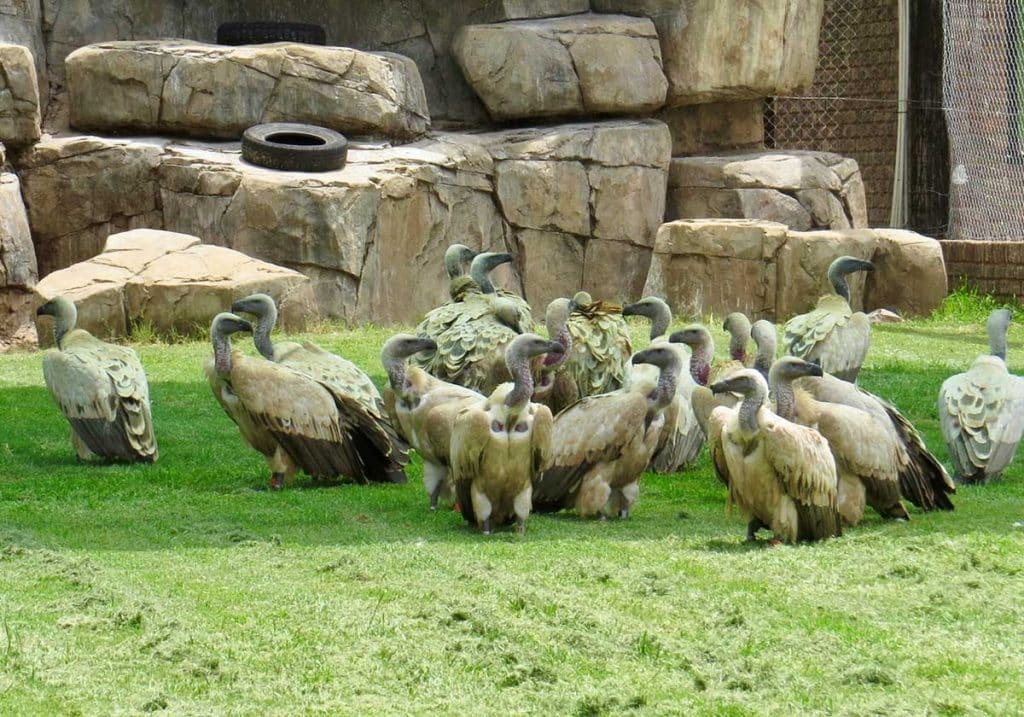
The Centre’s aim is to release all fightable, fit and healthy birds back into the wild as soon as possible and to provide a safe haven for those unable to be successfully released.  The birds housed on a permanent basis fall into our educational, breeding or research programmes. Unfortunately we cannot accommodate all birds of prey and these are then handed over to reputable organisations such as the Johannesburg Zoo for their display and breeding programmes.

The Centre is occasionally visited by our wild resident Cape Vultures which roost along the cliffs of the mountains, as well as the occasional vagrant Marabou Stork. Other smaller wild bird species to be seen visiting the centre include; black-breasted snake eagles, yellow-billed kites, crimson breasted shrike, speckled pigeons, waxbills, thrush, and cattle egrets to name a few.

The Centre is home to a large number of birds of prey although our focus remains on vultures:

  • Cape Vultures
  • African White-backed Vultures
  • Lappet-faced Vultures
  • Palm-nut Vultures
  • Bateleur Eagles
  • Brown Snake Eagles
  • Steppe Buzzard
  • Yellow-billed Kite
  • Spotted Eagle Owls

For additional variety, we also have some very friendly horses and a couple of blesbok.

Directions:

Pretoria:  Take the Van der Hoff Road (R514) which begins at Hermanstad (Pretoria) and travel towards Hartebeespoort / Brits
Just before Hartebeespoort you will pass a butchery called Byernes, then another butchery called Byerkorf on the right hand side, a couple of meters thereafter you will pass an Excel garage on your left.  Less than 1 km, you will come to a dirt road on your right called Boekenhoutkloof. Turn right into Boekenhoutkloof and travel along this dirt road for about 800m. You will pass three other entrances on your right.  You will then come to No. 121 on the right hand side, large wall with our signage.

Fourways passing Lanseria:   Pass the Lanseria airport and continue until T-junction at Broederstroom, At the intersection, turn right and pass Pilandaba. Go over robots and at the next stop street, turn left and continue until t-junction where there is a slip way to the left. Turn left and continue, passing Xanado estates. Pass the robot and then 2 stop streets. At the 3rd stop street turn right at the total garage (on right) and continue,until t-junction.  At the t-junction, turn right and carry on straight along this road for approx 5km or so.  You will then come to a resort on the left called Bonanza. Shortly after this you will see a sign for Boekenhoutkloof on the left hand side where you will turn into. Travel along this dirt road for about 1km or so. You will pass three other entrances on your right.  You will then come to 121 on the right hand side with a large wall and signage.

Animal Adoptions:
Wrangler and Cherokee the Lappet-faced Vultures
Adopted by: The Jeep Club of South Africa (www.jeepclubsa.co.za)

Flaps & Ziggy the Cape Vultures
Adopted by: Jika Africa (www.jika.co.za)

Harry the Bateleur Eagle and Mafuta the Cape Vulture
Adopted by: ABC Auto Parts (www.abcautoparts.co.za)

Lilo the African White-backed Vulture
Adopted by: the Van de Biezen Family


Your donations to help the plight of Vultures will be hugely appreciated and will go a long way to ensuring the continued survival of these wonderful birds.

More Info


Contact us to see how you can play an important role in vulture conservation and other projects in South Africa.


More Information


Kerri Wolter
Mobile: +27 82 808 5113
Fax: +27 86 505 6470


Walter Neser
Mobile: +27 76 593 9849


Media and Publications

http://www.care2.com/causes/environment/blog/vultures-are-worth-saving

Africa Geographic

Media_24_Bylae-BB-Wes_Buite-4[1]31May2011

Vulture.Birds&Birding.Jan2011

Media_24_Bylae-BE-Noord_Buite-3.Beeld.Sept2010

Vultures[1]

Africa_Wild_-_Vulture_Conservation_Low_Resolution1[1]

JULY-Africa_at_a_glance[1]

wwf_Vulture_Evaluation_Project_launch_150408[1]

Media_Releas_(Vulture_Enclosuren_Project[1]

Press release. Vulture Programme – Impacting Society. R&L Reserve

Science-VultureArticle

Publications

Vulture rescue and rehabilitation in SA. An urban perspective

Whittington-Jones_et_al_VN_60_6-12[1]

NSAID_ketaprofen_for_vultures_24_03_09[1]

Diclofenac_results_vultures_03.03.09[1]

clincal pathology AWBV

FINAL PAPER JUNE 08 Anthrax Peter Turnbull

VULTURE NEWS 57 – Wolter et al 2

diclofenac in vultures

VULTURE_NEWS_57_-_Wolter_et_al

Pharmacokinetics of meloxicam in vultures

Plos Article

Diclofenac in Cape vultures

08_BCI_Race_to_save_S_Asian_Vultures[1]

falco34[1]

Newsletters and Annual reports


Your donations to help the plight of Vultures will be hugely appreciated and will go a long way to ensuring the continued survival of these wonderful birds.

More Info


Contact us to see how you can play an important role in vulture conservation and other projects in South Africa.


More Information


Kerri Wolter
Mobile: +27 82 808 5113
Fax: +27 86 505 6470


Walter Neser
Mobile: +27 76 593 9849


Staff, Students and Volunteers at VulPro

Kerri Wolter
Kerri has always been passionate about animals and the environment and much of her youth was spent horse riding and with her dogs. After school, she obtained a secretarial diploma following advice that this was ‘the right thing’, then continuing her studies for Business Computing and Marketing and Business Management (MBM) diplomas leading to work as an accounts analyst for Standard Bank and administrator in Sasol. In her own words, this was not really the direction she wanted to take but “her horse needed to eat”. Fortune though led her to meet Professor Gerhard Verdoorn, then Head of the Vulture Study, Raptor Conservation and Poison Working Groups of the Endangered Wildlife Trust where she was appointed manager of the Vulture Study Group. She remained for 2 years and then moved on in 2005 to manage the Vulture Unit at the De Wildt Cheetah & Wildlife Trust. The opportunity arose there for her to hand-raise her first vulture and her passion and dedication towards the cause of vultures took off in earnest. She left De Wildt at the end of 2006 to establish the Vulture Programme under the wing of the Rhino & Lion Wildlife Conservation NPO, now independent as VulPro. So now Kerri has been involved in vulture conservation for 8 years, and has no doubt that vulture conservation is her calling in life, and a cause to which she is wholly dedicated in heart and soul. Needless to say, however, her training in business computing and management in those earlier days is standing her in good stead now in her role as Founder/Manager of VULPRO.

Walter Neser
Walter joined VulPro in September 2010, following his life long passion of working with vultures. This came about after meeting Kerri and assisting with the production of the video "Path into the Future" (see page 3 of the December 2010 issue of VulPro News). Walter was the pilot in the video and gave Kerri her first 'vulture flight'.
Walter has worked on birds, especially birds of prey since 1986, starting at the Ornithology Department at the Transvaal Museum, Pretoria, tracking and studying Bat Hawks and researching their breeding biology. More recently, Walter has been carrying out field work concerned with environmental toxicology as it affects Halieatus species (Bald and Fish Eagles) for Michigan State and Clemson Universities in the USA. Walter is a skilled rock climber which enables him to work effec- tively on cliff and tree nesting species together with vari- ous researchers around the world, assisting with nest access for ringing chicks, collecting samples etc. If you ‘google’ Walter (definitely to be recommended) you will see his principal public face is as an ace paraglider and, as well as being paragliding instructor, test pilot and display performer, he puts this skill to good use in bird and animal surveys, one of the most cost effective and least disturbing way of doing this. Others of his many interests include photography, herpetology and horse riding. It has to be agreed, VulProRLWC News suggests, that Kerri is quite lucky....

Karen Kruger
Karen, volunteer and friend of VulPro, assisted us in obtaining and securing sponsorship from Eland Platinum for our new lapa facilities. Karen gives up her time freely to vulture conservation and puts her heart and soul into the welfare of all our birds at the Centre. She visits the Centre three times a week and helps with our bird enrichment, feeding and training programmes as well as watching over the Centre in Kerri’s absence. Karen has become a very important and integral part of VulProRLWC and is somebody whom we can trust and count on at a moment’s notice. VulProRLWC is extremely grateful to Karen for her support, passion, and dedication to vulture conservation.

Orbert & Notice
Standing behind the bench, Orbert Gayesi Phiri has been with VULPRO since its inception in 2007. Orbert is passionate about animals taking on the responsibility of looking after all animals at the centre, training our new students each year and pri- mary caretaker on Kerri Wolter’s frequent absences. Orbert has a truly special way with animals and they respond amazingly well to him, sensing he a friend. He goes the extra mile to ensure the animals take first priority and have clean drinking and bathing water and sufficient food. Orbert is a tremendous asset to the Centre, a team player, friend and part of our expanding family.

Seated in front, Notice Kampion Phiri started with VULPRO in June 2007 just as a temporary employee, helping during the holiday periods when Orbert was on leave. His outstanding performance, hard work and enthusiasm made him indispensible and he has become the centre’s permanent primary maintenance person as well as expert vulture capturer. Only bitten once on his lip, Notice is fearless − and enor- mously strong, ever protective of the farm and all its inhabitants. His hard work, dedication and commitment to the centre is greatly treasured. As with Orbert, No- tice is a friend and an important member of our family.


Your donations to help the plight of Vultures will be hugely appreciated and will go a long way to ensuring the continued survival of these wonderful birds.

More Info


Contact us to see how you can play an important role in vulture conservation and other projects in South Africa.


More Information


Kerri Wolter
Mobile: +27 82 808 5113
Fax: +27 86 505 6470


Walter Neser
Mobile: +27 76 593 9849


Coming Soon


Your donations to help the plight of Vultures will be hugely appreciated and will go a long way to ensuring the continued survival of these wonderful birds.

More Info


Contact us to see how you can play an important role in vulture conservation and other projects in South Africa.


More Information


Kerri Wolter
Mobile: +27 82 808 5113
Fax: +27 86 505 6470


Walter Neser
Mobile: +27 76 593 9849


MyPlanet Banner
© VulPro 2011 - All Rights Reseved